Grammar
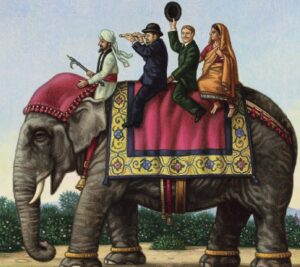
Around the World In Eighty Days
Summary of Around the World in Eighty Days Chapter XXXIV (In which Phileas Fogg at last reaches London) Phileas Fogg was in prison. He had been shut up in the Custom House, and he was to be transferred (taken away) to London the next day. Passepartout, when he saw his master arrested, would have fallen upon (attack) Fix, had he not been held back (caught) by some policemen. Aouda (औडा) was thunderstruck (astonished / हक्का-बक्का हुआ) at the suddenness of an event which she could not understand. Passepartout explained to her how it was that the honest and courageous Fogg was arrested as a robber. The young woman’s heart revolted (disgusted) against so heinous (evil/ bad) a charge, and when she saw that she could attempt to do nothing to save her protector, she wept bitterly(extremely/फूट फूट कर). As for Fix, he had arrested Mr. Fogg because it was his duty, whether Mr. Fogg was guilty or not. The thought then struck (felt) Passepartout, that he was the cause of this new misfortune (calamity)! Had he not concealed (kept secret) Fix’s errand (intention) from his master? When Fix revealed his true character and purpose, why had he not told Mr. Fogg? If the latter had been warned, he would no doubt have given Fix proof of his innocence, and satisfied him of his mistake; at least, Fix would not have continued his journey at the expense and on the heels of his master, only to arrest him the moment he set foot on English soil. Passepartout wept till he was blind, and felt like blowing his brains out. Aouda and he had remained, despite the cold, under the portico of the Custom House. Neither wished to leave the place; both were anxious (eager) to see Mr. Fogg again. That gentleman was really ruined, and that at the moment when he was about to attain (achieve) his end. This arrest was fatal. Having arrived at Liverpool at twenty minutes before twelve on the 21st of December, he had till a quarter before nine that evening to reach the Reform Club, that is, nine hours and a quarter; the journey from Liverpool to London was six hours. If anyone, at this moment, had entered the Custom House, he would have found Mr. Fogg seated, motionless, calm, and without apparent anger, upon a wooden bench. He was not, it is true, resigned; but this last blow failed to force him into an outward (express) betrayal of any emotion. Was he being devoured by one of those secret rages (violent anger), all the more terrible because contained, and which only burst forth, with an irresistible force, at the last moment? No one could tell. There he sat, calmly waiting—for what? Did he still cherish (kept) hope? Did he still believe, now that the door of this prison was closed upon him, that he would succeed? However that may have been, Mr. Fogg carefully put his watch upon the table, and observed its advancing hands (of the watch). Not a word escaped his lips, but his look was singularly set and stern. The situation, in any event, was a terrible one, and might be thus stated: if Phileas Fogg was honest he was ruined; if he was a knave (rascal), he was caught. Did escape occur to him? Did he examine to see if there was any practicable outlet from his prison? Did he think of escaping from it? Possibly; for once he walked slowly around the room. But the door was locked, and the window heavily barred with iron rods. He sat down again, and drew his journal (diary) from his pocket. On the line where these words were written, “21st December, Saturday, Liverpool,” he added, “80th day, 11.40 a.m.,” and waited. The Custom House clock struck one. Mr. Fogg observed that his watch was two hours too fast (ahead). Two hours! Admitting that he was at this moment taking an express train, he could reach London and the Reform Club by (8.45) a quarter before nine p.m. his forehead slightly wrinkled (folds). At thirty-three minutes past two (2.33) he heard a singular (strange) noise outside, then a hasty opening of doors. Passepartout’s voice was audible, and immediately after that of Fix. Phileas Fogg’s eyes brightened for an instant. The door swung open, and he saw Passepartout, Aouda, and Fix, who hurried towards him. Fix was out of breath, and his hair was in disorder. He could not speak. “Sir,” he stammered, “Sir-forgive me-most- unfortunate resemblance-robber arrested three days ago-you are free!” Phileas Fogg was free! He walked to the detective, looked him steadily in the face, and with the only rapid motion he had ever made in his life, or which he ever would make, drew back his arms, and with the precision of a machine, knocked Fix down. “Well hit!” cried Passepartout, “Parbleu! (French expression, great) that’s what you might call a good application (use) of English fists!”(मुट्ठी) Fix, who found himself on the floor, did not utter a word. He had only received his desserts. Mr. Fogg, Aouda, and Passepartout left the Custom House without delay, got into a cab, and in a few moments descended at the station. Phileas Fogg asked if there was an express train about to leave for London. It was forty minutes past two. (2.40) The express train had left thirty-five minutes before. Phileas Fogg then ordered a special train. There were several rapid locomotives (rail engine) on hand; but the railway arrangements (officers) did not permit the special train to leave until three o’clock. At that hour Phileas Fogg, having stimulated (motivate) the engineer by the offer of a generous reward, at last set out towards London with Aouda and his faithful servant. It was necessary to make

To Sir With Love – 2
SETTING (i) Which event took place in the extract? Choose the correct one. Give reason/s to support your answer. (a) Annual Sports Day on November 15th (d) Annual Social and Cultural Gathering on November 15th (c) Half-yearly report of Students’ Council on November 15th (d) Farewell Programme on November 15th Ans: c) Half-yearly report of Students’ Council on November 15th The lines to support this: “The half-yearly report of the students council was on November 15th and was one of the important days in the calendar of Greenslade School.” (ii) The event in the extract was held at the _____. Choose the correct alternative. Give reason/s to support your answer. (a) Author’s house (b) Auditorium of the school (c) Market (d) Garden Ans: (b) auditorium of the school. The lines from extract to support: “A bell was rung at 10 am and every one trooped into the auditorium to sit together in classes.” (iii) The incidents in the extract occurred at a particular place. Explain the significance of that place in your own words. Ans: The incidents in the extract took place in the auditorium of Greenslade School. Since the major theme of the extract is student-teacher relationship, the school serves as the perfect setting. The students present their half-yearly reports and question the panel of teachers. Another aspect of the setting is the stage where they are taking active participation in their school. Finally, the stage also represents the perfect platform for the students to showcase their skills. (iv) Explain how the setting of the extract contributes to the theme of the novel. Ans: The teacher- students relationship is one of the most important theme of the novel. Racism is another theme. He describes here the school where the narrator felt difficult time with students. The students harassed him mentally. They were disrespectful and mischievous. The narrator tried to handle them peacefully with his novel techniques. He tolerated them and forgive. He used respectful words ‘Miss’ and ‘sir’. There was shocking change in the behaviour of the students. It was observed on the day of Students Council. They performed confidently and cleverly. Thus the setting rightly contributes to the theme of the novel. Various traits of the major characters characters traits (qualities / विशेषता) Denham Bold, clever, Respectful, Confident Miss Phillips Calm, helpful, well- informed, clever, skillful Ferman Funny, dramatic, Confident, persuasive Potter Wise , intelligent , Knowledgeable, clear HSC Examination Countdown! DaysHoursMinutesSeconds 9822716201 arsodyogiraj@gmail.com 4, Dewkinandan, Shinde Plots, Yavatmal.
Elementor #2155
Isha Deshpande 97/100. Nayan Keote 97/100. Devanshi Bhurane 96/100. Chanchal Shirbhate 94/100. Kaustobh Shahane 93/100. Parth Rampurkar 93/100. Shruti Butle 93/100. Samiksha Bhoyar 93/100. NEW Pricing Table $ 25 / m List Item #1 List Item #2 List Item #3 Get Started characters traits (qualities / विशेषता) Denham Bold, clever, Respectful, Confident Miss Phillips Calm, helpful, well- informed, clever, skillful Ferman Funny, dramatic, Confident, persuasive Potter Wise , intelligent , Knowledgeable, clear Arsod English Classes, Yavatmal For 12th English Arsod English Classes, Yavatmal For 12th English I am testimonial text. Click edit button to change this text. Lorem ipsum dolor sit amet, consectetur adipiscing elit. Ut elit tellus, luctus nec ullamcorper mattis, pulvinar dapibus leo. Customer #1 CEO, Invision Inc. I am testimonial text. Click edit button to change this text. Lorem ipsum dolor sit amet, consectetur adipiscing elit. Ut elit tellus, luctus nec ullamcorper mattis, pulvinar dapibus leo. Customer #2 Lead Developer, Automattic Inc I am testimonial text. Click edit button to change this text. Lorem ipsum dolor sit amet, consectetur adipiscing elit. Ut elit tellus, luctus nec ullamcorper mattis, pulvinar dapibus leo. Customer #3 Store Manager, Walmart Inc My client name Activity Sheet-1 English For All Activity Sheet-1 Topics One Passage from 1.1/1.2/1.3/1.4 Two poems (1) Question and 2) appreciation)from 2.1/2.2/2.3/2.4 Writing Skill – from Virtual Message/ SOP/ Group Discussion/blog Writing (any two points) First Novel Grammar Activity Sheet One Q. 1.A) Read the given extract and complete the activity given below: (12 Marks) A1. Read the following statements and pick out the […] gd English For All gd From Q4 [c] Group Discussion Rama, Asif, Rachana and Aarav are participating in a group discussion. The evaluator has given them a topic ‘Teenagers are more inclined towards junk food nowadays’. Write suitable dialogues for each participant giving his/her opinion on the topic. Evaluator: You’ve all been given a few minutes to think on your topic for today’s group […] SOP Q.4. Statement of Purpose- 4 marks University of Bath, UK is one of the leading Universities for Business Studies. You belong to a business family – wish to start your own business carry forward your family business in future. In your junior college you have opted for commerce, scored well in your Std. X Board […] Test series Time Table Paper Time – 11.30 A.M. 19 Dec. 2022 l Marks – 42 l Time – 1.30 hrs. Topics One Passage from 1.1/1.2/1.3/1.4 Two poems (1) Question and 2) appreciation)from 2.1/2.2/2.3/2.4 Writing Skill – from Virtual Message/ SOP/ Group Discussion/blog Writing (any two points) First Novel Grammar 26 Dec. 2022 l Marks – 42 l Time […] JEE Main 2023 English For All JEE Main 2023 JEE Main Application Form 2023 (Out) JEE Main Application Form 2023 – National Test Agency has released the JEE Main 2023 registration form online on the official website. JEE Main 2023 application form is available on the website, jeemain.nta.nic.in. The direct link to fill the application form for JEE Main 2023 is activated at jeemain.nta.nic.in […] SOP English For All SOP Q4(2) Statement of Purpose Q. University of Bath, UK is one of the leading Universities for Business Studies. You belong to a business family – wish to start your own business carry forward your family business in future. In your junior college you have opted for commerce, scored well in your Std. X Board Examination […] Suspendisse potenti. Praesent ac sem eget est egestas volutpat. Fusce neque. In hac habitasse platea dictumst. Morbi nec metus. Sed magna purus, fermentum eu, tincidunt eu, varius ut, felis. Phasellus leo dolor, tempus non, auctor et, hendrerit quis, nisi. Vestibulum volutpat pretium libero. Nullam accumsan lorem in dui. Pellentesque habitant morbi tristique senectus et netus et malesuada fames ac turpis egestas. In consectetuer turpis ut velit. Phasellus leo dolor, tempus non, auctor et, hendrerit quis, nisi. Vivamus laoreet. Praesent ac massa at ligula laoreet iaculis. Cras non dolor. In hac habitasse platea dictumst. Ut a nisl id ante tempus hendrerit. Morbi mattis ullamcorper velit. Nullam sagittis. Sed a libero. Donec mollis hendrerit risus. Curabitur ligula sapien, tincidunt non, euismod vitae, posuere imperdiet, leo. Pellentesque habitant morbi tristique senectus et netus et malesuada fames ac turpis egestas. Praesent egestas neque eu enim. Donec mollis hendrerit risus. Donec orci lectus, aliquam ut, faucibus non, euismod id, nulla. Aenean imperdiet. Nulla consequat massa quis enim. Aenean imperdiet. Fusce commodo aliquam arcu. Fusce convallis metus id felis luctus adipiscing. Suspendisse faucibus, nunc et pellentesque egestas, lacus ante convallis tellus, vitae iaculis lacus elit id tortor. Sed lectus. Etiam vitae tortor. Praesent adipiscing. Sed in libero ut nibh placerat accumsan. Pellentesque ut neque. Donec id justo. Phasellus gravida semper nisi. Donec quam felis, ultricies nec, pellentesque eu, pretium quis, sem. Vestibulum dapibus nunc ac augue. Nam at tortor in tellus interdum sagittis. Maecenas tempus, tellus eget condimentum rhoncus, sem quam semper libero, sit amet adipiscing sem neque sed ipsum. Sed lectus. Quisque ut nisi. Sed aliquam ultrices mauris. Sed mollis, eros et ultrices tempus, mauris ipsum aliquam libero, non adipiscing dolor urna a orci. Etiam feugiat lorem non metus. In turpis. Morbi mattis ullamcorper velit. Sed consequat, leo eget bibendum sodales, augue velit cursus nunc, quis gravida magna mi a libero. Maecenas nec odio et ante tincidunt tempus. Ut leo. Praesent vestibulum dapibus nibh. Sed aliquam ultrices mauris. Nunc interdum lacus sit amet orci. Nunc interdum lacus sit amet orci. Vestibulum facilisis, purus nec pulvinar iaculis, ligula mi congue nunc, vitae euismod ligula urna in dolor. Curabitur at lacus ac velit ornare lobortis. Fusce vulputate eleifend sapien. Vivamus elementum semper nisi. Praesent adipiscing. Donec pede justo, fringilla vel, aliquet nec, vulputate eget, arcu. Aenean leo ligula, porttitor eu, consequat vitae, eleifend ac, enim. Fusce vel dui. Sed fringilla mauris sit amet nibh. Nunc nonummy metus. Pellentesque habitant morbi tristique senectus et netus et malesuada fames ac turpis egestas. Phasellus blandit leo ut odio. Praesent egestas neque eu enim. Fusce risus nisl, viverra et, tempor et, pretium in, sapien. Vestibulum turpis sem, aliquet eget, lobortis
To Sir With Love
E. R. Braithwaite Eustace Edward Ricardo Braithwaite (1912 to 2016), known as E. R. Braithwaite, was a Guyanese-born British-American novelist, writer, teacher and diplomat, best known for his stories of social conditions and racial discrimination against black people. He was the author of one of the famous 1959 autobiographical novels, ‘To Sir, with Love’.He also wrote ‘A Kind of Homecoming’, about his tour of Africa, ‘A Choice of Straws’, a novel set in London, and ‘Reluctant Neighbors’, a memoir and treatise about racism. Braithwaite’s numerous writings primarily deal with the difficulties of being an educated black man, a black social worker, a black teacher, and simply a human being who found himself in a set of inhumane circumstances. ‘To Sir, with Love’ is an autobiographical novel. The narrator is an engineer, but to make both ends meet, he accepts the job of a teacher in a rough London East End school. The school is full of troublemaker students who were rejected from other schools for their behaviour. At the beginning, the narrator is ridiculed and bullied by the students, but later his calm demeanor and desire to see them succeed gradually earn him their respect. Summary of the Novel ‘To Sir, with Love’ is a work of fiction based on the life of the author, E.R. Braithwaite. The main character, E. R. Braithwaite, works as an engineer in an oil refinery. He served in the Royal British Air Force in the war. After the war, being a black person, he was unable to find employment. As a last resort, he applied in a school to become a teacher. Surprisingly, he is accepted at the Greenslade School in London’s East End, and is set to teach the senior classes of the school. While reading the novel, we have to understand that the time period in which the story takes place is very important. Braithwaite finds that even though he considers himself British and has served in the Royal Air Force (RAF), the English do not consider him to be one of them. This leads Braithwaite to feel bitter about the English and colonialism, as well as about his white students. Braithwaite’s teaching position starts out roughly and is embarrassed time and again. He considers his students disrespectful (impolite), ill-mannered and mischievous (naughty) while his students consider him to be an arrogant (proudy) outsider, unfamiliar with the social environment in which they have grown up. The students harass him from day one, slamming their desks during his lecture, using foul (bad) language, and bullying (दादागिरी) him to a great extent. Even the girl students do not spare (leave) a moment to harass Braithwaite. In a reaction to that Braithwaite verbally scolds the girls for acting in an unladylike manner and being unruly (uncontrollable) in the class. When he understands that his outburst (angry) has not gained him any respect and co- operation from the students, he changes his teaching and handling tactics (plans) and he decides to interact with them as though they are adults and respectable persons. He requires every girl be referred to as ‘Miss’ and that his students call him ‘Sir.’ At first, the students find this level of deference (respect) ridiculous (funny) and unnecessary; however, they come around after only a few weeks, completely changing both their hygiene and their attitudes towards one another. This marks the success of Braithwaite in handling the students in a very amicable way. To increase the class cultural exposure (सांस्कृतिक प्रदर्शन), he takes them on field trips and excursions (trip) to museums and theatres, to everyone’s surprise many of the students have never been. A white female teacher, Gillian Blanchard, accompanies the class on these excursions; this marks the beginning of a friendship between Blanchard and Braithwaite. Similarly, Braithwaite’s relationship with his students is tested many a times. Although his students frequently disappoint and hurt him, he learns to forgive them, the students constantly surprise him with their maturity, empathy (the ability to understand and share the feelings of another.) and knowledge. Another facet (angle) of the story which greatly affects its narrative lies is the heavy history of colonialism, its dark consequences (result), mental and physical trauma (damage) that increases Braithwaite’s hatred (hate) and wrath (anger) for British. He constantly feels the prejudicial (harmful) effects of colonialism while living in England after World War II, and these negative experiences frequently shape his thoughts and actions. Braithwaite is surprised and shocked by the conditions in which these students live, and also the physical trauma of the war that can be seen throughout his teaching environment. Theme of the Novel 1] Students-teacher relationship, 2] Prejudice (पक्षपात) and 3] Racism (जातिवाद) are the major themes of the novel. Braithwaite gets a job of a teacher in a rather rough and notorious (infamous/कुविख्यात) school. He finds that the students belong to a background that is not suitable for learning and their overall development and progress. He notices that the students are in no mood to change their attitude and behaviour. Braithwaite with his novel (new) and creative ideas, innovative techniques and understanding the students’ psychology, ultimately wins their hearts in no time. (very soon) Though he was bullied, harassed, mentally and physically tortured many times, he didn’t lose his patience and continued implementing his novel ideas and techniques that helped him to bring a significant change in his students’ lives. The racism prevalent (spread) in Great Britain during the mid-1940s, the time period during which ‘To Sir, with Love’ takes place, is of primary significance in the novel. The narrator cites (mentions) repeated incidents in which he experiences the racism of white Britons, including encounters on the bus, at job interviews, at Greenslade school, when searching for housing, at a restaurant with his girlfriend and so on. At the outset, Braithwaite is struck by the unexpectedness of such prejudice. He was brought up in British Guiana and he viewed himself as a British citizen, not as a black British citizen in a British
Mahatma Jyotiba Phule
Mahatma Jyotiba Phule Born: 11 April, 1827 Place of Birth: Satara, Maharashtra Parents: Govindrao Phule (father) and Chimnabai (mother) Spouse: Savitri Phule Children: Yashwantrao Phule (adopted son) Education: Scottish Mission’s High School, Pune; Associations: Satyashodhak Samaj Ideology: Liberal; Egalitarian; Socialism Religious Beliefs: Hinduism Publications: Tritiya Ratna (1855); Powada: Chatrapati Shivajiraje Bhosle Yancha (1869); Shetkarayacha Aasud (1881) Passed Away: 28 November, 1890 Memorial: Phule Wada, Pune, Maharashtra Jyotirao ‘Jyotiba’ Govindrao Phule was a prominent social reformer and thinker of the nineteenth century India. He led the movement against the prevailing caste-restrictions in India. He Mahatma Jyotiba Phule was also a pioneer for women education in India and fought for education of girls throughout his life. He is believed to be the first Hindu to start an orphanage for the unfortunate children. Childhood & Early Life Jyotirao Govindrao Phule was born in Satara district of Maharastra in 1827. His father, Govindrao was a vegetable-vendor at Poona. Jyotirao’s father and uncles served as florists, so the family came to be known as `Phule’. Jyotirao’s mother passed away when he was just nine months old. Jyotirao was an intelligent boy but due to the poor financial condition at home, he had to stop his studies at an early age. He started helping his father by working on the family’s farm. Recognising the talent of the child prodigy, a neighbour persuaded his father to send him to school. In 1841, Jyotirao got admission in the Scottish Mission’s High School, Poona, and completed his education in 1847. There, he met Sadashiv Ballal who remained his close friend throughout his life. At the age of just thirteen years, Jyotirao was married to Savitribai. Social Movements In 1848, an incident sparked off Jyotiba’s quest against the social injustice of caste discrimination and incited a social revolution in the Indian society. Jyotirao was invited to attend the wedding of one of his friends who belonged to an upper cast family. But at the wedding the relatives of the bridegroom insulted and abused Jyotiba when they came to know about his origins. Jyotirao left the ceremony and made up his mind to challenge the prevailing caste-system and social restrictions. After reading Thomas Paine’s famous book ‘The Rights of Man’, Jyotirao was greatly influenced by his ideas. He believed that enlightenment of the women and lower caste people was the only solution to combat the social evils. Efforts Towards Women Education Jyotiba’s quest for providing women and girls with right to education was supported by his wife Savitribai Phule. One of the few literate women of the time, Savitribai was taught to read and write by her husband Jyotirao. In 1851, Jyotiba established a girls’ school and asked his wife to teach the girls in the school. Later, he opened two more schools for the girls and an indigenous school for the lower castes. Jyotiba realised the pathetic conditions of widows and established an ashram for young widows and eventually became advocate of the idea of Widow Remarriage. Sometimes small girls were married to men much older. These girls often became widows and were left without any family support. Jyotiba was pained by their plight and established an orphanage in 1854 to shelter these unfortunate souls from perishing at the society’s cruel hands. Efforts Towards Elimination of Caste Discrimination Jyotirao opened his home to people from all castes and backgrounds. He was a believer in gender equality and he exemplified his beliefs by involving his wife in all his social reform activities. Many people accused him of acting on behalf of the Christian Missionaries. But Jyotirao was firm and decided to continue the movement. Interestingly, Jyotirao was supported by some friends who extended their support to make the movement successful. Satya Shodhak Samaj In 1873, Jyotiba Phule formed the Satya Shodhak Samaj (Society of Seekers of Truth). He undertook a systematic deconstruction of existing beliefs and history, only to reconstruct an equality promoting version. Membership to the Samaj was open to all irrespective of caste and class. Some written records suggest that they even welcomed participation of Jews as members of the Samaj and by 1876 the ‘Satya Shodhak Samaj’ boasted of 316 members. In 1868, Jyotirao decided to construct a common bathing tank outside his house to exhibit his embracing attitude towards all human beings and wished to dine with everyone, regardless of their caste. Death Jyotiba Phule devoted his entire life for the liberation of untouchables. Apart from being a social activist and reformer, he was also a businessman. He was also a cultivator and contractor for the Municipal Corporation. He served as Commissioner of the Poona Municipality between 1876 and 1883. Jyotiba suffered a stroke in 1888 and was rendered paralyzed. On 28 November, 1890, the great social reformer, Mahatma Jyotirao Phule, passed away. Published Works Jyotiba had penned a number of literary articles and books in his lifetime and most were based on his ideology of social reforms like the ‘Shetkarayacha Aasud’. He also penned some stories like ‘Tritiya Ratna’,. He wrote dramas like ‘Satsar’ Ank 1 and 2, which were enacted under his directives to spread awareness against social injustice. He also wrote books for the Satyashodhak Samaj . 9822716201 arsodyogiraj@gmail.com 4, Dewkinandan, Shinde Plots, Tilakwadi, Yavatmal

confusing words – 6
HSC Examination Countdown! DaysHoursMinutesSeconds Phenomena & Phenomenon Phenomena is the plural form of phenomenon. Elicit & Illicit The verb elicit means to evoke or draw out. The teacher elicited from the students the names of the mischievous students . The adjective illicit means illegal. The young lift man was guilty of committing illicit acts. Empathy & Sympathy Empathy is a psychological attachment in which one understands other. or imagines another’s experience. Sympathy is feelings of pity and sorrow for someone else’s misfortune: 9822716201 arsodyogiraj@gmail.com 4, Dewkinandan, Shinde Plots, Tilakwadi, Yavatmal.

confusing words – 5
HSC Examination Countdown! DaysHoursMinutesSeconds Continuous Continuous means constant, without interruption. Continual Continual means recurring or frequently repeated. Different than & different from People commonly use than with different, but than is used for comparisons, and different is not comparative. Different from is preferred. Miss. Phillips was considered brainless, but she was different from other teachers Emigrate Emigrate means to move away from one’s country. Salman Rushdie emigrated from India. Immigrate Immigrate means to come to live permanently in a country that is not your own (to move into another country). They immigrated to India. Migrate Migrate, means to move from one country, place, or locality to another or periodically from one region or climate to another, as certain birds, fishes, and animals: Parasite worms migrating from the lungs to the liver. Click the following Buttons for the other post on confusing words Part first Part second Part Third Part fourth

confusing words – 4
HSC Examination Countdown! DaysHoursMinutesSeconds What is a Resume? Resume comes from the French word, resume, meaning to sum up. This is usually crisp and focuses on your skills. Resume is job oriented and highlights your skills for that particular job. This makes it easy to scan through and get an idea of your skills. What is a CV? CV comes from the Latin phrase, curriculum vitae meaning the course of life. CV represents a detailed chronological overview that lists out your career. Let us look at some factors that you can use to differentiate between these two. Difference in format & content Resumes are short & crisp A resume is a precise description of your career that can be covered in under 2 pages. It is always concise and talks only the specifics as necessary. It is about your work experience and showcases your proficiency. Once the recruiter goes through it, the recruiter knows what you bring to the table in terms of employable skills. CV’s are much longer A CV is prepared with details that can go beyond 2-3 pages. 2. Difference in content A Resume talks about skills Resume provides you the flexibility to present only the most important skills, in the best light. Resume allows you to show the skills a recruiter is looking for and not bog them down with unnecessary chitter chatter. Related: 21 powerful resume keywords to use in your resume. CV talks about entire educational and professional career CV consists information about your educational background including achievements, projects, research papers and publications. CV also covers any recognition & awards you received throughout your career. Click the following Buttons for the other post on confusing words First second Third Get on

Confusing words – 3
HSC Examination Countdown! DaysHoursMinutesSeconds Sensor Sensor is a device i.e. a mechanical or electronic detector. Censor a censor is a person who cuts potentially offensive material or objectionable subject matter from a text or broadcast (i.e. a book or film.) Censer a censer is a container of burning incense or the person who carries it. Senser An obsolete (old/ not in use) spelling of censer. Remember: censer, censor, senser, sensor are homophones of the English language. Homophones – Sound is same but meanings and spellings are different. Confusing Words 1 Confusing Words 2 Difference between Get on / Get in

Confusing Words -2
HSC Examination Countdown! DaysHoursMinutesSeconds Allusion An allusion is an indirect or passing reference. (उल्लेख) Example: The teacher made my allusion on the stage as an honest student. Illusion An illusion is a false idea, belief or misleading appearance. (भ्रम) Example: No doubt, it was an illusion of the development of our company. A while The word a while means for a short time. Example: After a while, you can go from here. Awhile The word awhile means for a while. Example: We should stop here awhile to make an inquiry of our senior citizens.